Make a Treat Plan the Whole Household Can Follow
Agree on which treats are available and keep a visible count that includes training rewards, chews and snacks from different people.
7 min read
At breakfast someone shares a biscuit. At midday there are rewards for a quiet walk. After work another person brings out a chew, and each person remembers only the thing they offered. A shared treat plan makes those little contributions visible without taking the pleasure out of giving a reward. It also keeps a visitor from reaching into a bag with no idea what the dog has already had. Start by deciding which extras fit your dog's feeding plan and which household routine would make the amount easy to see.
Count the things that tend to go uncounted
Walk through one ordinary day and write down the food the dog gets outside its main meals. Include training pieces, chews and anything used to make a toy more interesting. Note food given alongside medication if that is part of the routine, but keep following the veterinary instructions for how it is administered. A reward offered on a walk still belongs in the record even if it came out of somebody else's pocket. You can find patterns by keeping this list for a few days before trying to change it.
For packaged items, read the calorie information and note what the stated unit means. A package can give a value per piece, per gram or for a serving made up of several pieces. A food divided into quarters yields four handoffs, but all four add up to the whole item. Write down the exact item name when a brand sells similar looking products in different sizes. If a calorie figure is missing or unclear, ask the maker for a value in a unit you can use. You may also decide to stick with a familiar item whose information is easy to find.
The WSAVA dog treat guide describes keeping treats below ten percent of daily calories and discussing the quantity and type with the veterinary team. For an individual dog, ask what choices suit its feeding plan. An animal with a veterinary diet may have specific instructions about extras. Keep those instructions near the treats and share them with every caregiver. A number taken from another household's note tells you little about what your dog should receive.
Give the amount a physical home
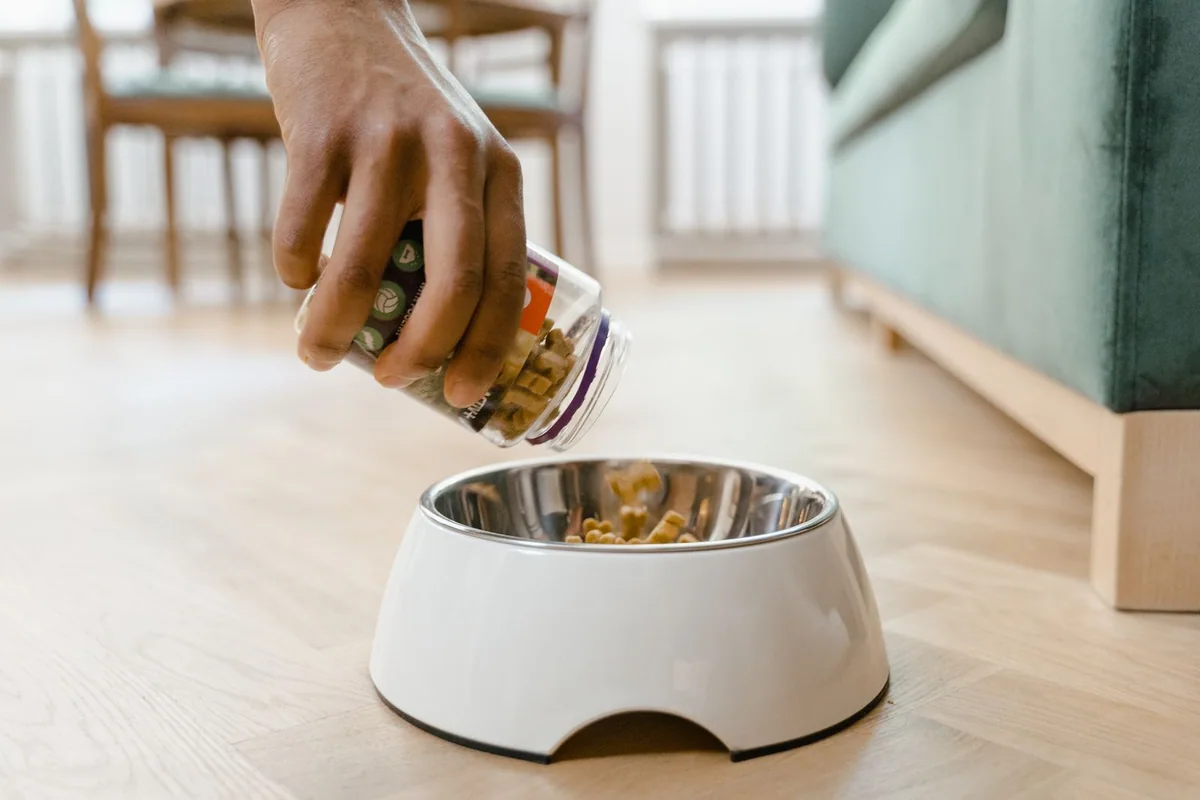
With the agreed daily amount in hand, decide whether a visible container or a written tally works better. Some families set aside the day's approved dry rewards in a small labelled cup and give only from that supply. Perishable items stay stored according to their instructions and can be tracked by a mark on the daily note. Place the tracker where people prepare food, out of the dog's reach. If someone wants to take training rewards on a walk, they can move part of the visible supply into the walking pouch rather than opening a new package.
This is useful for a family with different schedules. The early walker fills the walking pouch from the day's supply and records any pieces brought back. The person at home can see how many pieces are still available without asking where the walker is. Decide what to do with unused pieces at night under your normal storage routine. Food returned from a walk may have been handled or exposed to moisture, so do not assume it belongs back in the original bag. The plan should distinguish the day's serving supply from stored food.
A tally can work when approved extras differ in size. Write the item and amount given, with the time if several people feed. If you are recording calories, keep the unit and quantity together so nobody mistakes a count for an energy value. One line reading "after walk, two pieces from marked bag" is useful only when the marked bag refers to one known item. Use full product names the first time a new one appears, then shorten the note once everyone can identify it.
Reserve rewards for the moments that need them
Look at the week ahead. If a group class takes more food rewards than a short home exercise, plan for that before the class instead of collecting small pieces throughout the day and discovering that the usual supply is already gone. Use the types and sizes that suit your dog and activity. Cut or split a reward only if the product can be safely used that way. Some products, including certain chews, come with sizing directions that are more important than stretching a single item across several sessions.
On a quiet day you may use attention, play or access to a favorite activity when your dog genuinely enjoys it. It can be useful to name those choices beforehand. A person who always reaches for food when the dog waits at the door might open the door to the garden as part of the agreed routine, provided the space is secure. Another can bring a toy the dog likes and use a short game. Food remains available for moments where it serves the purpose you and the dog actually have, such as a training exercise that already works with a small reward.
If you plan to use a measured part of the regular ration for suitable training rewards, arrange that with the established feeding plan. Keep that portion visibly connected to the meal, so it is not served again by mistake. A labelled container saying "from today's dinner portion" is easier for the next person to understand than a pouch that simply looks full. Record the change before anybody measures the evening meal. Ask the veterinary team if you are unsure how to account for this in your dog's routine.
Handle people who arrive without the plan
Guests often want to offer a treat because the dog is waiting by the kitchen. Give them an easy instruction and a ready option, if appropriate. "Please use one piece from this cup if you would like to give her something" is easier to follow than a long list of foods to avoid. If the dog is done with extras for the day, show the guest a way to greet it or offer a familiar toy if the dog enjoys that. The guest should know who is allowed to handle food and where to wash their hands afterward.
At holiday gatherings, assign one person to manage the treat supply. Put human snacks where the dog cannot help itself, and ask diners to keep their plates and scraps out of reach. A buffet changes the room as well as the food choices. Set up a comfortable place for the dog away from passing dishes, using arrangements the dog already knows. When an accidental extra is given, note what and how much if known. If you are concerned about something the dog ate, contact the veterinary team promptly and describe the item clearly.
A sitter needs the same simple rule as the people who live in the house. Put the approved options next to the feeding note with the amount and conditions under which they are used. If the treat is usually given during a walk, say so rather than expecting the sitter to remember a previous conversation. When taking a new pouch away from home, label whose it is. Two dogs from the same household can have different plans even when their rewards happen to come from similar bags.
Walk through a split reward
Imagine an approved reward that comes in a long piece and can safely be divided according to its directions. One person uses half of the piece during a lesson and returns with the unused half. At home someone sees the pouch and thinks the half inside came from a second piece. A note recording "one piece packed, half returned" lets the evening caregiver read the whole event. If the package gives a value for a whole piece, it is also clear what fraction belongs in the tally.
Do the same exercise with a product that is measured by weight. Check the label's stated unit and put it on the note with the amount that was offered. A gram is a measure of mass and a calorie is a measure of energy, so the tally needs the appropriate label value to relate them. When the dog only eats part of an item, record what you know rather than guessing the remainder. The aim is to understand the day well enough to follow the household's agreed plan.
Revisit the plan using a real day
Pick one day from the first week and read the record in order. Does it show what was offered at each training session? Did an unmarked pouch make somebody think its contents were extra? Were two people each assuming the other had counted the evening chew? Adjust the point where the confusion happened. You might move the treat container beside the walking lead, add a checkbox for the scheduled item or get rid of a duplicate open bag that keeps appearing on the counter.
Then read one ordinary day that went smoothly. Keep the parts that made it easy. A cup that was filled once in the morning, for example, can be more reliable than several calculations made at the door. If the dog moves to a new food plan or changes activities, update the instruction and share the current copy with everyone. A treat plan succeeds when a person holding a training pouch and a person making supper both know what has already been given, even when neither was home for all of it.