Making an Apartment Hallway Work for a Dog
Arrange the everyday trip through a shared hallway and elevator so you have somewhere to pause, change course, and let neighbors pass.
8 min read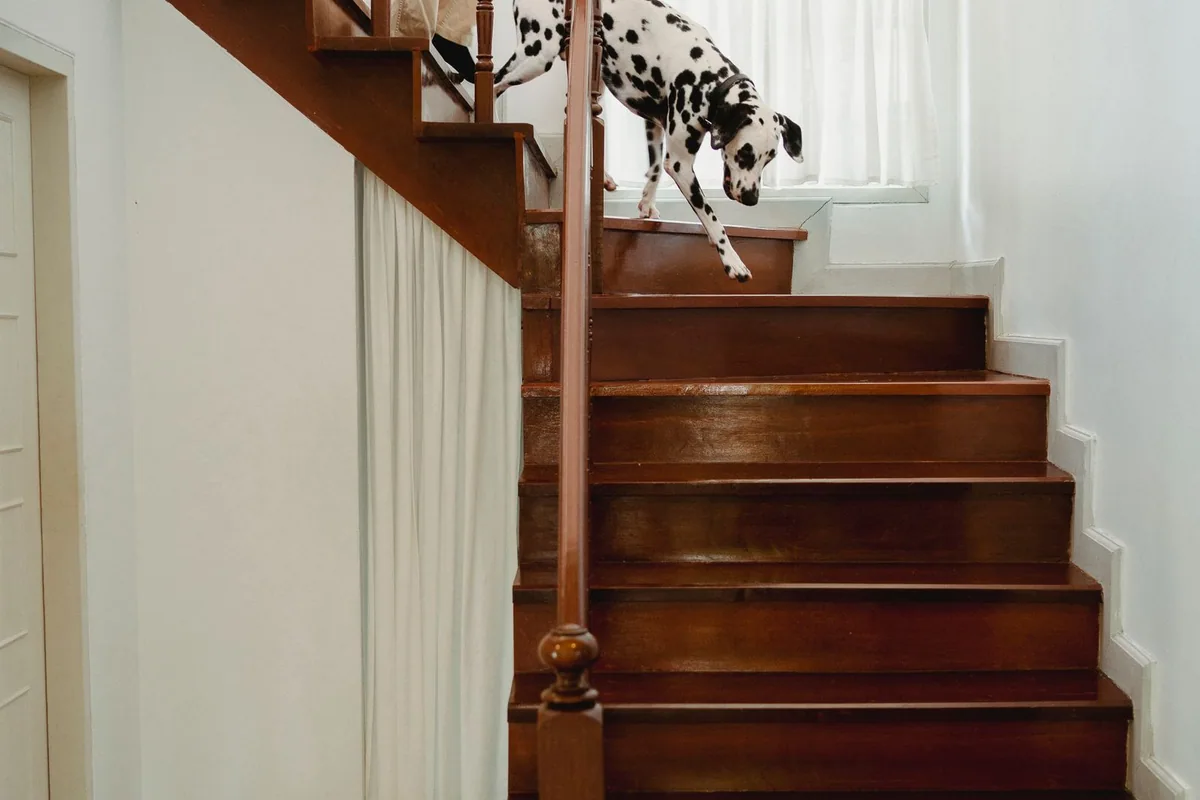
The distance between an apartment door and the pavement can be only a few dozen feet. It can still include three doors, an elevator opening suddenly, and a neighbor who appears just as you turn a corner. If your dog slows down in the hallway or comes out of the elevator already watching everything, take a moment to look at the building as a sequence of small spaces. The pavement may be the easiest part of the walk.
You can improve this trip without asking a dog to perform a complicated routine. Decide where to stand while you open a door, what you will do when the elevator is occupied, and where you can move if another resident arrives. If more than one person walks the dog, share the same sequence so that everyone knows where to wait.
Prepare on your own side of the door
Put the bags, leash, and keys in a reachable place before you put on shoes or open the door. The gap between a door and its frame is a poor place to untangle a leash. Inside the apartment, you can take a moment to attach it and check that the hardware is secure. This is also a better place to hand the leash to another person. The corridor should stay available for people who need to get through.
Listen for nearby activity before opening your door. In some buildings you can hear the elevator before it stops or tell when the door opposite is about to open. In others, a peephole gives you a useful view of a blind bend. Use whatever information the building gives you. If the corridor is occupied, you can wait inside until it clears instead of holding the door open and expecting others to walk around a dog they cannot see.
Think about the way your own door closes. A spring may pull it closed quickly after you step through. Hold it until the dog and leash are completely clear, and check where you will put your key before you need both hands. If you regularly need to balance parcels while walking out, stage them separately or ask a companion to carry them. Keep fire doors and other common exits clear, even during a quick trip.
Learn the shape of the common floor
Walk the hallway once without the dog if you can. Mark the parts where you can stand outside the flow of people and still see what is happening. At a corner you might be able to see shoes under a landing rail before you see the person. At a glass lobby door you may see that the pavement is clear but miss a cyclist moving across its other side. These clues help you decide which corners deserve an extra moment.
Notice places that look wider than they really are. A radiator, recycling bin, or shelf near a door may reduce the walking area below shoulder height. A tall dog may pass it easily, while a shorter dog experiences it as a narrow passage between the wall and someone's legs. Where two people cannot comfortably pass, wait at the wider end until the other person has come through. You can often do this without exchanging words, but a simple “Go ahead, we'll wait here” makes the situation clearer.
If the hallway is crowded because people regularly leave objects out, use the building's ordinary process to report blocked access. Describe the specific point and time when it happens. A discussion about the space is easier to act on than a discussion about whether all the dogs or all the people in the building need to behave differently.
Treat the elevator as an optional room
While waiting for the elevator, stand to one side with room for people to step out. In a very narrow lobby, try waiting several steps down the hall until the doors open. Read what happens before moving. A person may need to reverse a wheelchair or pull a shopping cart out. Someone with a dog may prefer to ride down alone. Taking the next car can be much simpler than having everyone fit into the first.
If you enter, keep the leash close in your hand and the dog on the same side of the doorway as you. Watch for a trailing loop when the door is open. Do not rely on an elevator sensor to detect a leash. Keep the dog clear of the door seam and move out together when you arrive. If the car fills unexpectedly and you cannot keep a clear exit, get off where it is convenient and wait for another. Check the building's posted instructions and use the emergency system if needed rather than trying to interfere with the doors.
Inside, give the dog a spot that does not leave them between you and strangers entering the car. Standing beside them near a wall may leave more usable room than facing forward with the dog across your feet. If another dog is already in the elevator, you can ask to take a different car. A brief sentence delivered before you start walking avoids the awkward situation of having to back out of the car as the doors are closing.
Compare the stairs on a normal day
A stairway offers a predictable line of travel if its steps and landings are suitable. Check the footing, width, lighting, and condition of the route before using it as your backup. Open risers, polished surfaces, and echoing metal doors can make some staircases difficult. Respect the building's rules about which exits are available for everyday use. Doors that are easy to open on the way down may require a key to return, and some exits lead directly into a loading area or a road.
Allow enough space between you and anyone ahead. If someone is coming the other way on a narrow stair, wait on a landing rather than trying to pass on the steps. Walk at a pace that leaves both you and the dog able to place your feet. Holding a bundle of shopping on a staircase makes it harder to see a leash or a dog below you. Take a separate trip if the stairs are the only comfortable route that day.
How convenient the stairs are may change as a dog ages or as the weather makes the treads wet. If your dog starts avoiding stairs they previously used or shows a change in how they move, ask a veterinarian about the change. In the meantime, find another route if one is available. Forcing a narrow transition is rarely the practical answer when the dog can use a different exit or a quieter elevator trip.
Give neighbors a simple way past
Neighbors may be pleased to see the dog, uneasy around dogs, or in too much of a hurry to signal what they want. Make room first. If a neighbor stops to talk, choose a position where they can leave without stepping over the leash. If the dog needs extra distance, say so in ordinary language. When you have a clear plan for where you are moving, there is little need to explain why the dog prefers that amount of space.
Ask people who want to greet the dog to wait until you are out of the corridor and in a wider place. That gives the dog a chance to approach or move away, and it gives other residents the entire width of the hallway. If two dogs are meeting in the lobby, each person should be able to leave without pulling a dog past the other. Save longer conversations for a place where people and dogs can choose their own distance.
Take responsibility for any mess in the common area. Carry bags and know what the building asks residents to use for cleanup. Report anything that may leave a slippery floor, including water tracked in after a walk. If the floor is being cleaned, ask whether another route is available or wait until it is safe. A damp lobby with a sudden sharp turn can be inconvenient for the person walking the dog as well as the dog.
Practice the journey with nothing else planned
If one stage of the trip has become difficult, take the route at a quiet time with no destination beyond the entrance. You can return upstairs after seeing how long the elevator takes, or stop at the lobby doors and head back before you go outside. The purpose is to learn whether the new position at a corner or the new route around the lobby works when there is time to use it. Several of the decisions take only seconds once you know where you are going.
Try the return route at a different hour. A lobby that is empty when you leave for a midday walk may be full when people come home or collect deliveries. If you can see the mail area from outside, take a moment to check it before entering. A longer way to the door with a better view may be useful after dark, when you can see activity through the lobby windows but people inside cannot see you coming.
Finally, tell anyone else walking the dog which exit is easiest, where they can wait without blocking people, and which times usually bring extra traffic. You may find that the same building contains two equally usable routes. The quieter one is a sensible default, and the other is there for days when an elevator is out, somebody is moving furniture, or the most direct corner has become a place to stand and talk.