Taking a Dog to an Outdoor Cafe
Choose a patio table, arrival time, and exit plan that keep a cafe visit comfortable for your dog and everyone working around you.
7 min read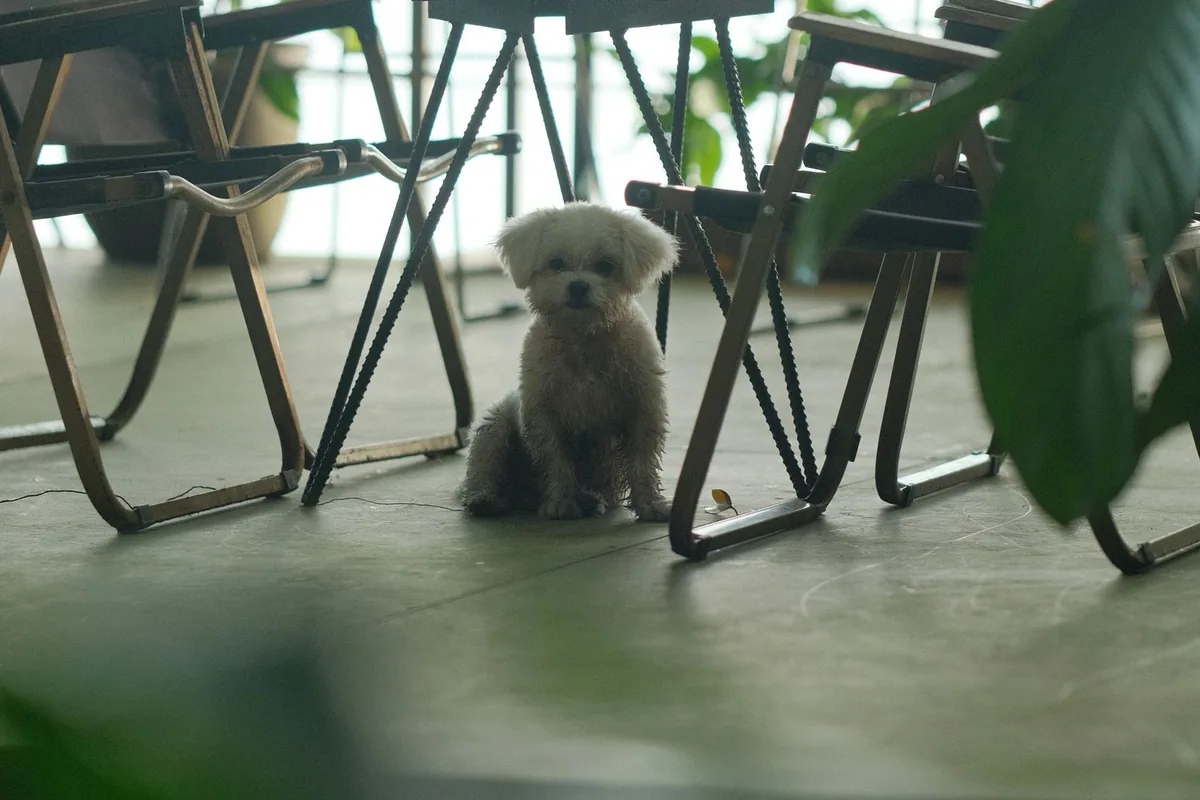
A cafe patio looks generous when you are standing at the host station. Once a dog is underneath the table, the available space changes. Chair legs form a tight grid, the person carrying soup needs a straight path, and the dog can see the sandwich falling apart two tables away. A pleasant first visit usually starts with a few minutes of decision making before you order anything.
Begin with an ordinary question. If you had to walk out halfway through your coffee, could you do it without leaving someone to explain the situation to staff? Pick a place and a way of ordering that make the answer yes. A short visit where you can pay and leave easily gives you more freedom to watch the dog and enjoy the time you have.
Read the room from the pavement
Confirm that the cafe allows dogs in the specific outdoor area you intend to use. Some venues allow dogs only at the tables outside a fence, and others have an outdoor area reached through a room that pets cannot enter. Reservations, patio access, and local rules can change. Asking the person working the door is quicker than assuming the dog you saw across the patio was there under the same arrangement.
Look at the routes staff take between the tables. A table can have an empty space beside it that doubles as a turning area for a tray or a route to the point of sale. Watch one person walk through before deciding that the gap is available. If you use a table against a wall, check that the dog can still get out without squeezing between seated customers. The best seat for people watching is often the worst one for a dog who feels obliged to monitor every pair of shoes.
Pay attention to the kind of patio you are choosing. A wide courtyard off a lane offers different sights and sounds from a narrow platform at the edge of moving traffic. Even when there are fewer customers, a roadside table may get a constant stream of exhaust, bicycles, and abrupt sounds. A cafe may also shift tables with the weather. Where you sit can matter more than whether you have been to the cafe before.
Arrange one usable patch of floor
Try visualizing where the dog could lie down at full length. The outline should fit within your side of the table and leave a clear path past the chairs. Dogs sometimes choose a spot that lets them face outward. If they need to swivel whenever someone approaches, the table might have too much movement nearby. Sit somewhere the dog can face the room from a protected edge, without being directly between you and the person who brings the order.
Bring a compact mat if your dog already uses one comfortably. It should lie flat without curling into the walkway. Choose one that can be shaken off or folded inward, especially when the ground is dusty. A mat is most helpful where chair legs leave enough room to move and the surface is suitable to lie on. On a hot day, pay attention to the floor under the table as well as the temperature in the air. Sunlit paving and metal decking can be uncomfortable. Seek shade or take your order elsewhere if you cannot find an agreeable place to wait.
Hold the leash yourself and keep the working length short enough to stay out of the aisle while leaving enough room for the dog to shift position. A loose chair, narrow table, or decorative fence is a poor anchor. It can shift, tip, or cause the line to snag if the dog moves suddenly. Put your bag where you can pick it up with one hand. If your chosen arrangement requires setting down a hot drink before you can control the leash, the table is likely too cramped for the way you need to use it.
Make the first order easy to leave
Early in a cafe's day, seating is often more flexible. The first visit can consist of ordering a cold drink or waiting at an outside counter, taking a few minutes in a quiet seat, and leaving before the service rush. Find out whether you order at the table or inside. If a companion can place the order, one person can stay outside with the dog while the other asks about the best table. If you are alone and the only till is inside, use the ordering option the venue permits or choose a place with an outdoor counter.
Consider the dog's preceding hour. An exciting trip through a busy market or a long wait in a crowded lobby can make a patio feel like one more place to keep watch. A brief pause on a familiar path on the way to the cafe leaves time for the dog to explore and take a toilet break. Walk a short way past the seating if the only free table happens to be by the entrance. Returning later with fewer people standing around the door may give you a better look at the floor plan.
Order something you can comfortably finish, carry away, or abandon. There is no reason to make a full meal the benchmark for a successful visit. If you visit as a group, agree who handles the dog and who pays if you need to move. That simple division can prevent the hesitation that sets in when everyone assumes someone else is about to ask for the bill.
Allow the staff to work at a normal pace
A server should be able to set down a plate without leaning over a dog or asking you to move a leash out of the way. When someone approaches carrying a tray, give them the aisle before they need to ask. If the dog is up and edging around the table, wait a moment before reaching for hot plates or drinks. You may need a second person to help, or you may need to move to an easier table.
Some people ask before touching a dog and some reach automatically. A polite response such as “She needs a little space while we eat” works well if you would prefer a quiet visit. Ask children to give the dog enough room to keep their paws on the floor and move away. Anyone who does want to greet the dog can do so only if you are comfortable with the situation and the dog is free to decline the approach. You can spend the entire visit without arranging a single greeting.
Give the same space to other dogs. Leave room between the tables if one passes and avoid stretching the leash toward it. Water and familiar food, if you bring any, are easiest to manage when you can keep them away from a neighbor's dog and collect the containers promptly. Check the floor for crumbs, small bones, or discarded wrappers before you settle. At a table where people have just eaten, it may be best to wait for a cleanup or sit somewhere else.
Decide early when the visit has run its course
Watch what happens after a sound or a passerby rather than treating every raised head as a problem. A dog may look at the door when it shuts and then return to resting. If the dog stays upright, repeatedly moves toward the exit, or is unable to find a comfortable position while the patio fills, the useful part of the outing may already be over. Pack the mat and leave before a crowded route makes it harder.
Sometimes the space changes faster than the dog can adjust. An accordion door opens, an umbrella starts rattling, a staff member brings out several tables, or the neighboring group decides to stand around their seats. A change of table may help if there is an accessible alternative. Going for a short walk around the block is just as reasonable. If you have paid already, tell staff you are leaving and clear any supplies that belong to you.
A dog that enjoyed ten minutes on a nearly empty patio may still prefer to be elsewhere during a long weekend brunch. Keep the distinction when planning the next trip. Use the kind of visit that has worked so far, including the time and the location of the table. If there is no quiet patch of floor that day, a coffee carried to a suitable bench may be the better outing.
Record the useful details for next time
After leaving, remember the few details that changed the experience. Was there direct access from the street? Could you see whether a table near the wall was free without going past the till? Was the dog able to lie out of the way, and was it easy to get up when you finished? Notes about access and layout are more useful than a general verdict about whether the dog “likes cafes.”
If the cafe becomes part of your routine, check whether your favorite seating arrangement still works when you meet a larger group or visit in a different season. The staff may have pulled tables indoors, and familiar shade can vanish as the angle of the sun changes. A patch of clear floor, a place to set your drink, and a dog that has room to settle are reliable details to look for even when you order somewhere completely new.