Teaching a Dog to Step Onto a Platform
Teach a voluntary step onto a low stable platform by rewarding exploration, checking the footing, and making it easy to step off.
7 min read
A platform can give a dog a clearly defined place to stand. It can also help you notice how differently a dog approaches two surfaces. Some dogs walk onto a sturdy board as if it had always been there. Others stretch their neck, put down one foot, and spend a little while working out whether the rest of their body should follow. The first stages give you useful information even if the dog never needs to do anything on the platform except stand there briefly.
Start with a low, stable surface that suits the dog. A practice platform does not need to be tall or resemble an agility obstacle. Choose one so low and broad that the important decision is whether to move onto a different surface. If your dog has a mobility issue, has trouble with ordinary floor transitions, or seems uncomfortable when stepping, ask a veterinarian which activities are suitable.
Check what happens when you put weight on it
Set up in a familiar room with a dry, suitable floor. Look for a platform that can take the dog's weight without moving, tilting, or making a surprising sound. It should be wide enough for the whole dog to stand naturally, with room to approach and leave from more than one direction. Do not improvise with a cardboard box, a loose board on top of something else, or a small stool. If you only have an unstable object, practice with a flat mat fixed in place until you have a suitable platform.
Use your hands to test the edges and the middle. A non slip surface should still have grip where the dog will first put a foot. A cover that feels comfortable but shifts under pressure can make the edge harder to read. Check the ground around the platform as well. If the dog steps off onto slick tile, the easiest part of going up may be followed by a difficult landing. Change the room or use a suitable stable arrangement on the floor before you invite the dog over.
Look at the height from the dog's perspective. A slight change above the floor can be enough for practice. A low platform can still present a conspicuous edge, especially against a floor with a strong pattern. A clear contrast between surfaces helps you and the dog see where each foot is going. Keep the activity slow and ordinary. There is no benefit to setting the platform higher simply because a dog can jump onto it.
Pay for exploration before you ask for standing
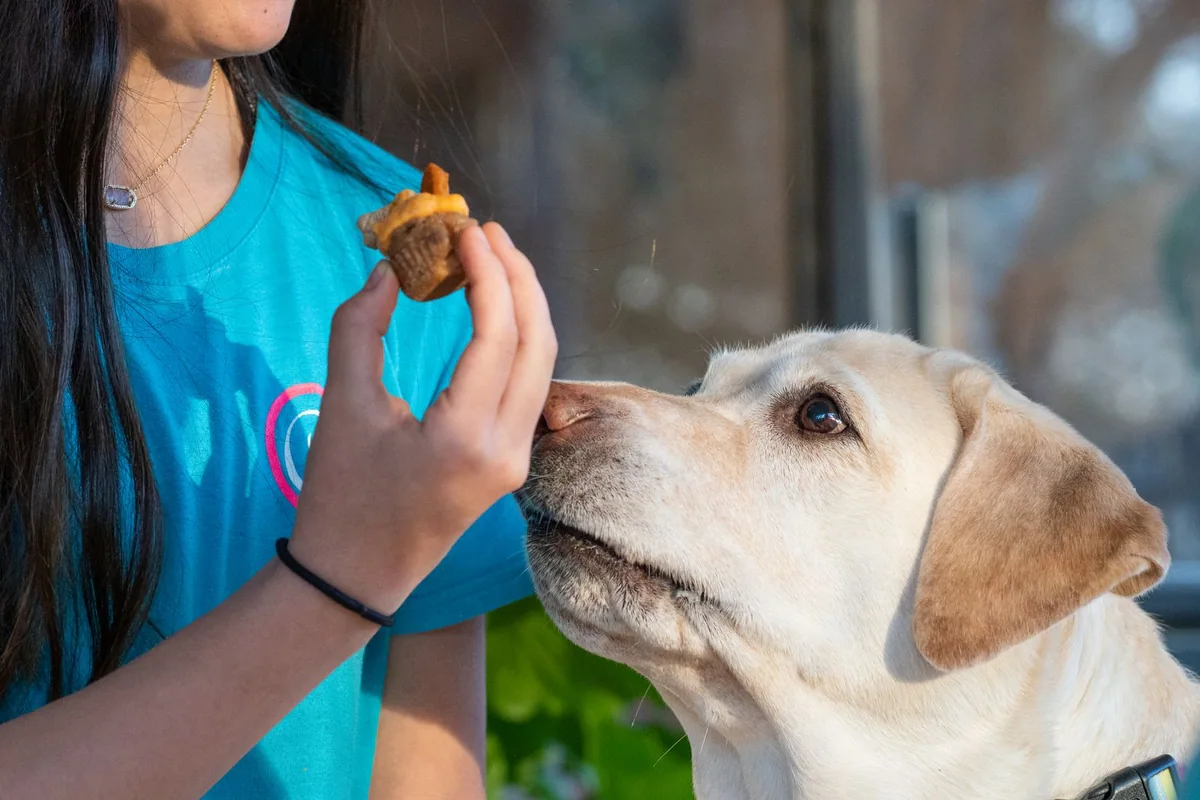
Bring the dog into the room and let them choose how close to come. Stand to the side of the platform so they can see the whole edge and can continue past it. If they look toward it, sniff the edge, or move a little closer, mark and reward the motion you noticed. Use a familiar brief marker and give a small reward somewhere the dog can reach without needing to step onto the platform yet.
Watch for the moment when the dog tries a foot on the surface. You can reward one foot and let the dog step back to the ground. A quick tap of a paw is enough information for the first attempt. If they approach again without hesitation, reward an equally easy action or wait for a slightly more deliberate step. Do not lift or place the dog's feet. The movement you are teaching is the decision to step, and you want the dog to be able to try it again in their own way.
Offer only a few repetitions at first. If the dog takes a reward and then turns toward another part of the room, pause. They may come back in a moment, or they may be finished with the setup. Check whether your position reduced their exit space. Even a dog interested in the platform may be unwilling to approach it if getting there puts them between two walls or beside your moving feet.
Build a stable place for the feet to finish
For a dog that readily places two feet on the platform, try rewarding where they can shift their body straight forward. Stand off to one side and give the reward near the front of the dog's comfortable reach. A reward held far away can encourage stretching without moving the back feet. Watch the shape of the movement. You want the dog to take a step that brings the body over the platform while leaving room to stop without stepping straight off the far edge.
Some dogs learn the front feet position as its own action. If you repeatedly reward two front feet and then end the session, that may be exactly what the dog offers. For an all feet version, give a dog who is comfortable with the first position a chance to take another step. Mark the next change you want, such as a hind foot lifting toward the surface or coming into contact with it. Give the dog room to go down in either direction. If they remain stretched out in one position, reset on the floor and make the next attempt easier.
Once all four feet are on the platform, reward while the dog is balanced and then invite an easy step off. Choose the direction with the clearest footing. The first several repetitions can end almost as soon as the dog arrives. You can learn a great deal about how well the dog understands the task by seeing whether they choose to repeat a movement that includes both an easy arrival and an easy departure.
Put a name on a familiar action
Choose a short cue such as “platform” when the dog starts to walk up readily as you approach the practice area. Say the word just before the action is likely to happen. Let the dog complete the usual movement, mark it, and deliver the reward on the platform. Give them a chance to step off. Avoid calling the word from far away before the dog has learned the exercise at close range.
Decide how the dog will know when to leave. A consistent release word can work, or you can finish by moving a small step toward the usual exit from the platform. If you want to add time standing, build it in brief increments while the dog stays comfortable. Reward on the platform at first and then give the exit cue. If you often reward only after the dog has stepped off, the step down can become the most predictable way to earn the food.
A mat, a rug, and a low board may each become a different cue. If you want the dog to use more than one surface, introduce one new safe surface at a time. Return to rewarding an easy approach when needed. Consider whether the new item feels different underfoot, moves in an unexpected way, or has an edge that is harder to see. Those details may explain why the dog treats two similar looking objects differently.
Try it in a situation that benefits from a clear station
Once the movement is comfortable, use it where a precise place to stand makes something simpler. During a brief practice session, it might allow someone else to walk a few feet past the dog without coming directly in front of them. In a room with several rugs, it can give the dog a consistent place to arrive before you start a different familiar activity. A stable platform may help when you need to show another person exactly where the dog should have enough space around them.
Keep the station separate from situations the dog finds difficult. If every trip onto the platform leads to handling or an event the dog tries to avoid, you have changed what the movement predicts. Practice an easy approach and release for its own sake. Where you intend to pair the platform with gentle handling, use short, voluntary steps and give the dog a free way to end the interaction. Ask for professional guidance if there is a history of discomfort or fear.
Put the platform away when nobody is supervising if it could create a trip hazard, block a route, or be used in a way you did not intend. Check the surface regularly. A piece of grip material can loosen at an edge, and a board can begin to rock once moved to a different floor. The dog who liked it yesterday may give you a useful early clue that something has changed today.
Know what the next attempt should look like
A simple practice record can contain one line. “Stepped on with four feet from the long side and stepped straight down” tells you what worked. “Hesitated after the corner moved” tells you what to fix. Use that record to choose the next small change rather than increasing the height or distance automatically. A goal of standing briefly in a known place can be achieved entirely on a low surface.
End while the dog still has a clear route back to the floor. Remove the equipment when they have moved away and give them the rest of the room again. On another day you can set it down, see whether the dog recognizes the approach, and reward an easy first step. The ability to try the same movement calmly is more useful than how impressive it looks from the doorway.