A Better Doorway Setup for Wet Dog Walks
Fit an entry mat, a place for a damp lead and reachable towels into the route you use after a rainy walk.
7 min read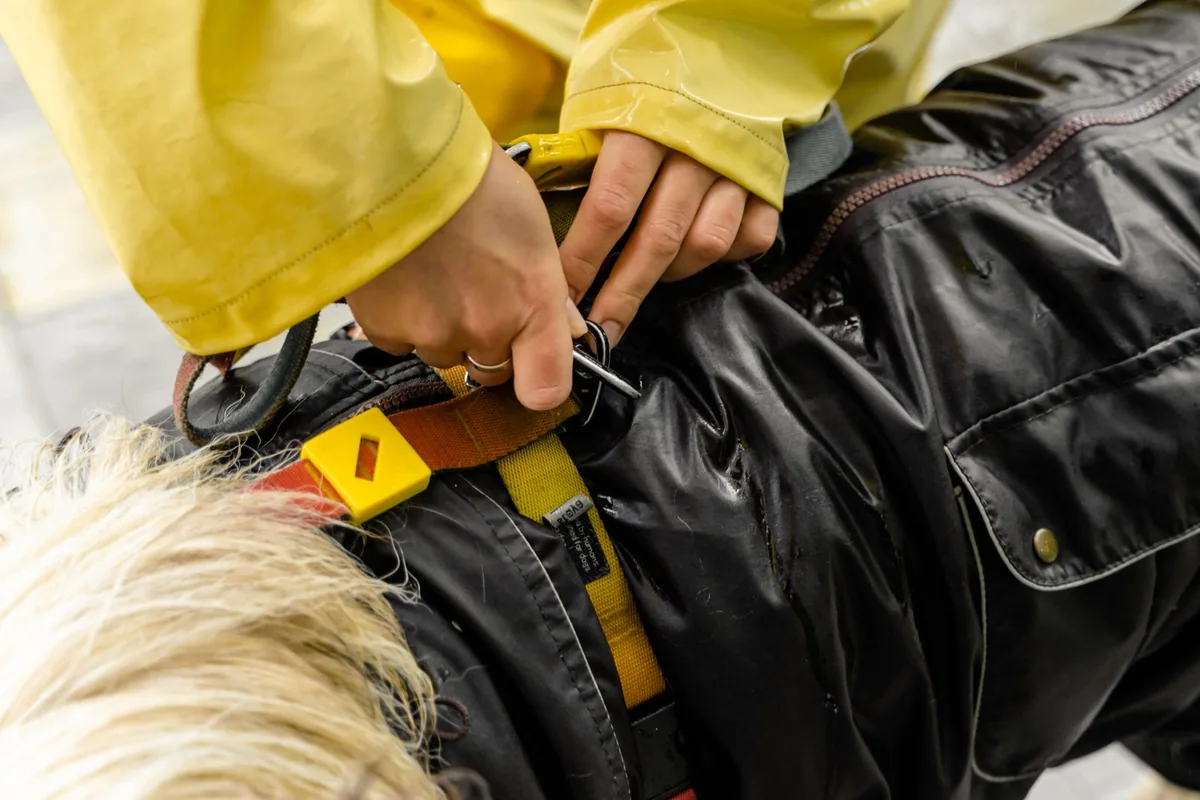
A wet walk usually ends while everyone is still moving. The door swings in, the dog steps around a pair of shoes and someone reaches over a grocery bag for a towel. Water gets where feet go first. A useful doorway setup follows those first few steps from the latch into the house. It gives you a dry place to stand, puts the towel within reach and lets damp equipment dry away from the things you will put on tomorrow.
Walk in from outside before buying anything
Open the door as wide as you use it with a dog and a bag. Look at the arc made by the door and the clear space needed to close it. Put a piece of paper on the floor where each of your feet usually lands. Mark the spot the dog first chooses to stand. Those three locations show how much of a mat you could actually use. A large runner behind you may leave the first wet pawprints exactly where they were. A narrow mat in the right place can be more useful than something broad you have to step around.
Check who else uses the route. A parent carrying a child, someone using a cane and a neighbor in a shared hall all need a clear walking surface. Keep equipment and floor coverings within the space where you are allowed to put them. Keep emergency exits and door latches unobstructed. A towel hanging from a lever handle can interfere with using the door in a hurry, even if it seems like the perfect reach from the mat. Look at the route while you are carrying the things you usually bring back.
If the entry opens directly into a room with carpet, decide where you can safely close the door before pausing. You may need one low mat just inside and a separate washable surface where the dog normally waits a few steps farther in. Do a dry run with the lead attached. A cramped pause at the threshold can make it harder to control the door when someone else enters. A pause on a larger surface inside may make the whole routine quieter.
Choose a floor surface you can clean and keep flat
Compare mats for their suitability on the floor you have. Check the manufacturer guidance for the material and backing, especially on a finished floor where some backings can leave marks. Test whether the mat stays in position when a foot moves sideways across it. Watch the corners, which can curl or catch a shoe. A heavy mat that stays in place on concrete may be less suitable near a low interior door. Check its clearance with the door shut and open.
Decide what will happen when the mat becomes saturated. If the backing holds water on the surface, there needs to be a place to lift and dry it where it will not drip into a hallway. If the mat lets water through, check the floor under it after a wet walk and dry it as appropriate for the surface. Two small washable mats can be easier to rotate than one large rug you have to wrestle into a washer. A washable tray may be useful for boots when it can be kept entirely out of the walking line.
Use the marks from your entry test to decide the shape. In a narrow hall a runner may work if it can lie flat without brushing either wall or the door. In a broad doorway a low rectangular mat can catch several first steps while leaving a clear lane. For a rental where you cannot fix anything down, use a mat suitable for the floor and check it after several entries. Do not rely on a pile of towels underfoot as a substitute for a stable walking surface.
Put the dry supplies at hand height
Stand on the mat holding an unloaded leash or the handle the way you normally do. Reach for the place you want a clean towel to live. You should be able to take it without turning your back on an open door or letting the lead slide out of your hand. A wall hook or shallow shelf can work where it will not snag sleeves or straps. Keep several clean towels rolled or folded so one comes free without pulling the whole stack to the floor.
Give the damp towel a different destination. A laundry basket in an adjacent room is fine if you can carry the towel there after the dog is settled. An airy place to hang it briefly may be more practical when you expect to use it again soon, provided the towel can dry and stay away from clean supplies. Follow the care directions for towels and any specialty drying cloth. A closed container full of wet fabric is often a poor choice for the space beside a front door.
If you keep a washable boot brush or another cleanup item near the door, put it where it can be used without spreading grit across the mat. A tray or easy-to-clean shelf can contain a small kit. Keep cleaning products out of pets' reach and follow the product instructions. The important distinction at the door is between items you need while bringing the dog in and items you use afterward, once the entry is clear.
Hang equipment where it can dry
Check the care instructions for the leash, harness and outer layers you use. Wet gear may need to be rinsed or wiped before drying, and different materials can have different limits on heat and cleaning. Use a hook or rack that holds the equipment without letting it drip onto clean towels or shoes. Avoid balancing damp straps on a radiator or heater unless the manufacturer says that drying method is appropriate. Let hardware dry before it goes into a closed drawer.
A person arriving for a second walk should be able to see which items are wet. Give the dry spare a separate position or let the whole rack serve one named purpose. A wet leash in a closed bag can be easy to forget until the next day. The rack works better when it includes the little things that often stay in a pocket, such as a bag holder or accessory pouch. Remove and empty them if they need separate care.
In a household with children or more than one dog, place frequently used dry gear where the intended person can reach it and where nobody will put a hanging loop across the door path. Give each dog its own marked hook if sizes are easy to confuse. Before going out again, inspect the equipment and reconnect it according to the maker's instructions. A well-arranged hook makes it easier to spot a strap that is twisted or a clip that has gathered mud.
Plan around a shared front hall
In a building with no private porch, the first part of the route may belong to everyone. Keep your dry towels inside the apartment and take a small cloth with you on days when the dog will need a quick wipe before stepping in. Use it in a place where you can control the dog and stay out of the walkway. Ask the building manager about any restrictions before leaving a mat or tray outside your unit.
If two people use the same entry at overlapping times, arrange the reset explicitly. The first person takes the damp towel to the agreed spot and puts a clean one within reach before the next walk. The second checks the mat for water before stepping onto it with a dog. On wet weeks, a small stock of ordinary washable towels may be easier to maintain than one specialty cloth that has to dry before it can be used again.
Make the pause comfortable for the dog
Introduce the waiting spot on a dry day. Give the dog room to step onto it and move away. Reward a calm approach with something that fits the dog's existing routine. If you plan to wipe paws, start with brief handling the dog already accepts. An animal that pulls away may need a slower introduction. Keep the door closed and the space secure before you unfasten equipment. If the dog wants to step away from the towel, let it have room rather than using the narrow entry to force it to stay.
Use the towel where it helps and observe which surfaces the dog willingly stands on. Some dogs hesitate on a sliding or unfamiliar mat. Test that it is stable and give the dog time to explore. If the best waiting spot is a little farther inside, move the clean towel there and leave the entry surface to catch the first wet steps. For repeated discomfort with paw handling, ask your veterinary team or a qualified reward-based professional for guidance appropriate to the dog.
Try the setup on an ordinary rainy evening and check the floor again after half an hour. Look for a wet patch near the mat edge, a hanging leash dripping onto a shoe, or a towel you could not reach while the door was closing. Move the item causing the extra step. The finished entry should be simple enough that a second person can follow it without asking where to stand. Once the door closes, the paws, towels and gear each have a place to go.