Finding a Good Walk in the Rain
Build a rainy day route with reliable footing, nearby turnarounds, and a sensible place to dry off when you get home.
8 min read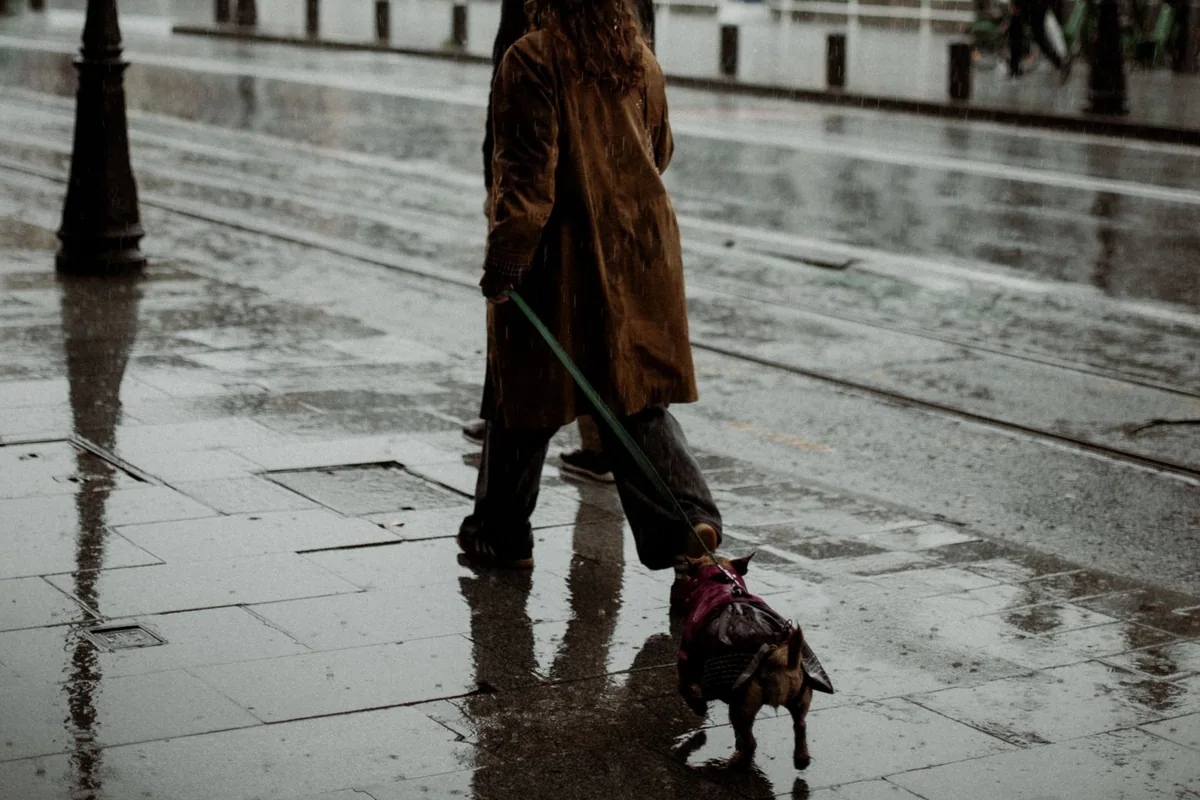
The view from the window can make a rainy walk look worse than it is. It can also hide the parts that will be genuinely unpleasant. Under the trees, the pavement may still be dry. Two blocks away, a clogged drain may have left a puddle across the only crossing. There is a difference between taking a walk while it rains and choosing to navigate a route whose difficult parts are all made worse by water.
Choose a modest outing based on the weather you have. A dog that normally likes to spend time outside may prefer a quick visit to a sheltered verge when rain strikes from the side. Another might happily walk under a soft drizzle but refuse a noisy canopy. Learn which surfaces and sounds make a difference before investing much thought in the ideal waterproof arrangement.
Walk out far enough to get useful information
From the building entrance, look at where rain is falling and which paths remain visible. If you can stand under cover, watch the first few people go by. They may be moving slowly around a patch of slick paving or stepping into the road to avoid pooled water. That is a reason to choose a different street. A clear sidewalk offers you a place to turn, and you need one close to home if conditions deteriorate.
Assess the local weather and follow relevant alerts. Avoid walking during thunderstorms or in conditions involving flooding, dangerously strong winds, or poor visibility. You can make room for an indoor activity while waiting for suitable conditions. Where you still need a brief toilet outing, choose a safe, nearby option and keep it short. Plan for the return from the beginning. Water can collect on a route that was clear when you left.
On a manageable day, start by walking to the nearest easy stretch of path. Notice the dog's pace on the first several surfaces. A comfortable dog may take the time to smell a post or look toward a familiar doorway. If the dog immediately heads back, consider whether there is a protected spot on the other side of the entrance. A route need not start in the direction you always walk when the weather is fine.
Take the surface one section at a time
A short piece of route can contain concrete, painted metal, loose leaves, a wooden ramp, and wet grass. Each offers different footing, especially when the dog needs to turn. Slow down near a transition and leave enough leash for the dog to pick a stable line without getting close to traffic. Look for solid edges to use instead of a steep bank or an uncertain puddle. Water can hide the depth of a hole and objects beneath the surface.
Crossings need their own check. A driver may have reduced visibility, and people carrying umbrellas may be watching their feet. Choose an established crossing with enough room to wait away from the curb. Clothing and equipment that remain visible can help other people see you, but visibility also depends on where you stand and whether there is light. Wait where you can be seen before crossing and use a short route if conditions limit your view.
Be especially thoughtful near streams, low paths, and temporary runoff. The edge of a path can change during a storm. Keep the dog clear of fast moving water and areas where you cannot see the ground. On a wet footpath through a park, look for signs or closures rather than stepping around a barrier. If the only way past a wet patch is an unstable slope or a busy road, turn back. That choice can be built into the route so it does not feel like a last minute change.
Find shelter that still feels open
A shallow awning can offer a short pause, but it can also funnel people directly into your path. Pick a covered spot that allows people to pass and gives the dog a clear view of how to leave. Water can fall in a steady line from the edge of a roof even when the pavement immediately beneath it stays dry. A dog may prefer the open path to stepping through that noisy strip.
Consider which direction the wind drives the rain. A quiet side of the block can stay relatively comfortable while the opposite corner gets the full force of the weather. If you have a longer route in mind, decide which direction gives you a sheltered return. Some people prefer to go into the wind first and walk home with it behind them. On a city route, the arrangement of buildings may matter more than the direction you started in.
An umbrella can change how you hold the leash and what the dog can see above them. Take a moment indoors to check that you can operate it while keeping good control of the leash, or choose rainwear that leaves both hands available. If an umbrella catches the wind or makes it difficult to pass others, close it when practical and move to a better spot. A walk that needs constant equipment adjustments is hard to manage on a narrow path.
Choose gear that suits the part of the walk you want to save
Some dogs are comfortable in a light rain layer they already know. Others move less freely in one. Check that any covering fits properly and allows normal movement and toileting, and watch for discomfort. Try it indoors in a calm setting before relying on it outside. If the walk is limited by a slippery ramp or a busy crossing, new clothing will do little to solve the main problem.
Pay attention to your own footwear. Boots that feel fine on a dry pavement may slide on a smooth wet slab. Make sure you can stop and turn without having to catch yourself by tightening the leash. Put bags and keys somewhere reachable so that you can keep a hand free. If you need to carry a second bag for wet equipment, check that it stays out of the dog's path.
Wear something that still lets you see traffic approaching from the side. Pull up the hood before leaving and turn your head both ways. If it blocks your view or rustles loudly enough to make conversation difficult, choose a clearer route with fewer crossings. Keep both hands available near a curb rather than trying to fold an umbrella and manage the leash at the same time.
Let the dog help decide when you turn back
A wet walk can be enjoyable when there is room to linger. Some scents may draw attention after rain, and a path can be quieter because there are fewer people out. Watch where the dog moves on their own. If the dog chooses a sheltered patch of ground and investigates it for a while, that can be the useful part of the walk. The farther stretch will still be available on another day.
Repeatedly stepping toward the doorway or standing with a tucked posture may be a reason to cut the trip short. Check whether there is a clear issue you can fix, such as wind blowing under an overhang or a metal plate the dog has to cross. Give the dog an easy way to leave. If you routinely need to hurry through the same difficult spot before the dog will move normally, choose a route that avoids it on wet days.
An outdoor outing can be split. Take a brief walk close to home while conditions are manageable and try another later if the weather improves. Use indoor time for a quiet activity the dog already enjoys, or let them rest if that is what they are doing. There is no reason for a rainy day schedule to reproduce the exact distance or route you would choose in dry weather.
If a trip has been interrupted by a loud downpour, leave the next attempt until conditions are quieter. Start from the same familiar entrance and let the dog investigate the first patch of ground at their own pace. A particular stretch might be perfectly usable as soon as the sound on the roof subsides, even with water still on the pavement.
Keep a short loop you can leave early
Picture a block with a brick wall on the first side, a busy crossing at the far end, and a narrow lane running back toward home. On a day with light, steady rain, the wall gives some shelter and a verge gives the dog a place to stop. At the end of the wall, look at the gutter before you commit to the crossing. If water covers the curb or vehicles are throwing spray onto the footpath, turn back along the wall. You have already given the dog the quietest section of the route.
If the curb and crossing are clear, check the lane before using it as the return leg. Look far enough ahead to see whether there is room to pass someone without stepping into standing water. A dry doorstep beside a narrow lane is useful as a brief waiting place only if you can reach it without blocking the entrance. When there is no such spot, retracing the first leg is the easier option.
Save the name of a short route that works. Include where you can turn back, where you can take cover briefly, and which crossing you skip when water gathers. A reliable route for a mild rainy day is a small thing, but it earns its place the first time you step outside and can think about the dog instead of trying to remember which street has the bad drain.