Teaching a Dog to Find a Hidden Toy
Turn one familiar toy into a search game with visible first hides, clear boundaries, and a finish that brings play back to you.
8 min read
You can start a search game with a toy in plain sight. Put it on the far end of a rug, let the dog walk over to it, and play together once they arrive. That small version explains the game. The dog goes looking for an object, finds it, and something enjoyable happens. When you start with a difficult hiding place, it can be hard to tell whether the dog knows what the game is supposed to be.
Use one object the dog likes and a room you can check before each search. A dog who generally enjoys picking up that toy has a reason to look for it. A dog who would rather stay beside you can participate by going to the toy and coming back for a familiar reward. Decide what you want to happen when the toy is found so that the game has an obvious ending.
Make a safe search area before hiding anything
A good first room has a few clear surfaces and an easy way to limit access to the rest of the house. Move small loose objects, electric cords, and anything fragile out of the places the dog might investigate. Keep the toy away from vents, chairs that can tip, and gaps where the dog might get stuck reaching for it. Give the dog a clear route around furniture. A hall can be simpler than a crowded living room if you can keep doors from swinging into the search.
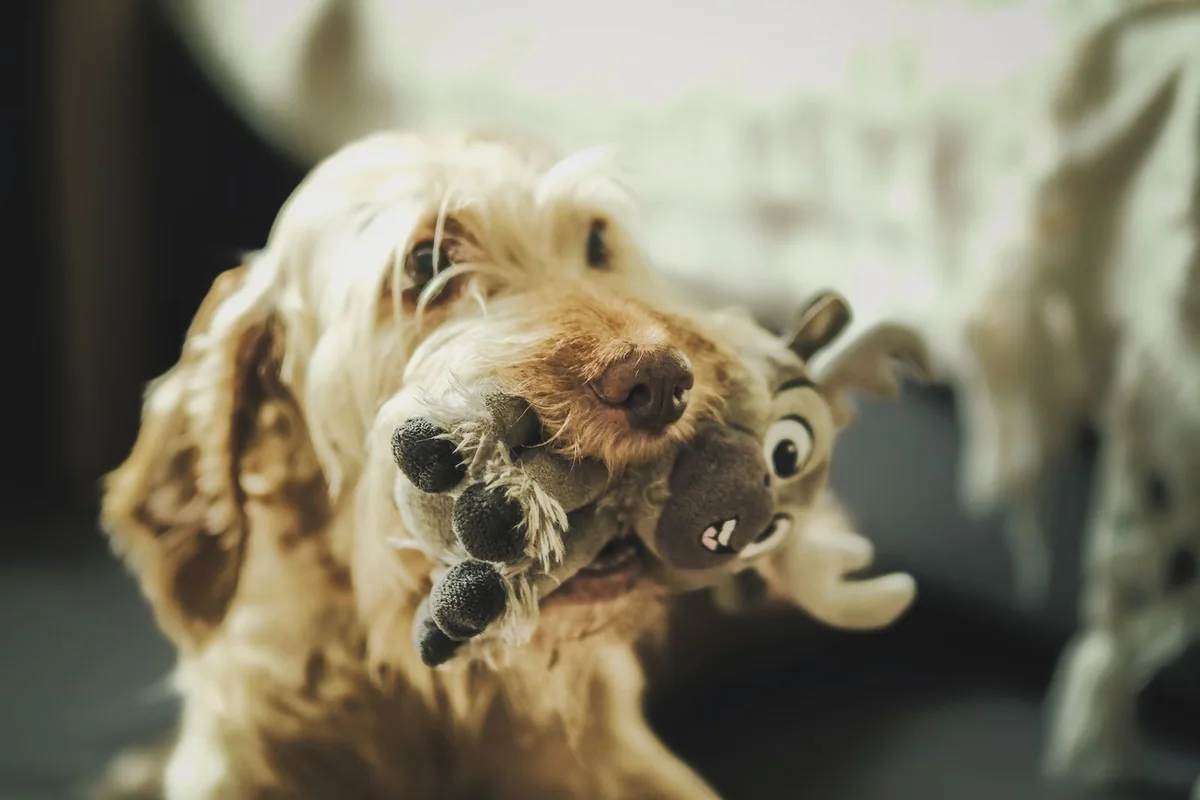
Pick a toy that the dog can carry safely and that stays in one place when you set it down. A ball that rolls behind furniture makes it difficult to keep the search area within bounds. A suitable soft toy or other familiar object can work well. Inspect it first. If the seams or other parts are coming loose, choose another one. Keep other pets outside the search area if they would crowd the dog or compete for the toy.
Choose where you will stand at the start. A doorway or the edge of the rug offers a recognizable starting place. Keep the route clear so that you can let the dog move toward the toy without stepping around them. There should also be a safe place for the dog to bring it back if they like to play near you.
Start by letting the dog see where the toy went
Show the toy briefly and place it on the floor several steps away. Let the dog watch the placement. Give a simple invitation such as “find your toy” and allow them to go to it. If your dog already waits comfortably for a moment, you can use that brief pause while you set it down. Otherwise a helper can set down the toy in view. The search does not need a formal wait at the beginning. It needs a chance for the dog to notice where the toy is and reach it on their own.
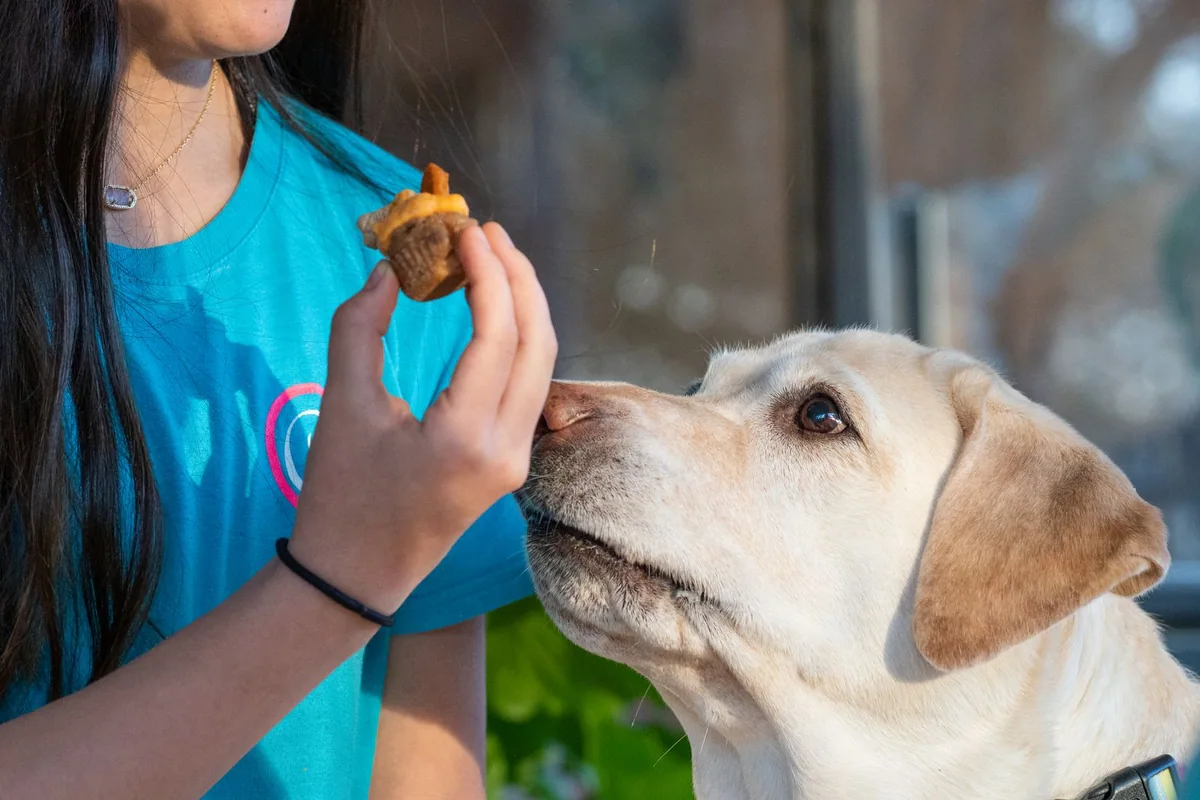
When the dog arrives, do something they enjoy. That might be a short game with the object, a brief celebration followed by permission to carry it, or a small familiar food reward. Avoid taking it away as soon as the dog reaches it. If the first object is in easy view but the dog goes elsewhere, try a different toy or place it closer. Some dogs need the payoff to happen at the toy before they will go to it without watching you.
Repeat in two or three visible places. Put the toy on the near end of the rug, then beside a solid piece of furniture with open space around it. Walk back to the same starting point each time. If you always place the toy in the first spot, you may teach a direct route to that spot. A small amount of variation tells the dog that the object can be found in different places.
Let the first hiding place be very nearly visible
A cloth partly covering a toy or a position just beside the corner of a broad chair can make an easy first hide. The dog should be able to reach the object without pushing furniture or burrowing into a pile of household items. If the dog can see part of it when they approach from one side, that is enough of a change. Give the cue once, step back, and watch where the dog goes.
A dog may head for yesterday's successful spot first. Give them a chance to check it and move on. You do not need to direct them around the room with your finger. If the search stalls, take a quiet step toward the general area and see whether the dog resumes looking. For the next repetition, move the toy to an easier place. A successful search that takes a few seconds can be more engaging than a long search the dog cannot finish without close direction.
When a dog understands a partial hide, try placing the toy in a straightforward spot while a helper stays with the dog at the starting place. Keep the dog able to move away. Return to the start before asking them to search. If the dog seems mostly interested in following the route you took, that is a reasonable part of the game. A home search can use sight, sound, and scent together. You can focus on finding the object without trying to decide which sense did the work.
Change the challenge without changing the whole room
One way to make a search a little harder is to keep the start the same and move the toy beyond a familiar landmark. Another is to make it less visible while keeping the distance short. Try only one of those changes at a time. If you hide the toy out of sight in a new room and start at a different doorway, you will have several possible explanations if the dog cannot find it.
Look for a place where the dog can make a few useful choices. Two corners of the same room are enough. A hide just around one side of a sofa may work if the dog can walk around it comfortably and can reach the toy without getting underneath. Avoid putting the toy higher than the dog can reach comfortably on the floor. The search is most interesting when the dog can complete it without climbing or pulling anything down.
Once the dog has looked in a few places, consider whether you are accidentally showing the answer. You may stare at the spot or move closer to it. On an easy setup, look at the dog instead, keep your feet still, and see whether the dog can search with less help. A companion who knows the placement can watch from outside the room and tell you if you always turn toward it as soon as the dog passes the first corner.
Bring the game to a predictable finish
Some dogs immediately bring the toy back. Others stop at the hiding place and begin playing. Decide whether you want the dog to return or simply find the object. If you are teaching a return, invite the dog back after they have found it and make the next thing that happens near you enjoyable. Give them space to turn and walk back without feeling that you will meet them halfway and take it.
For a dog who enjoys a few moments of independent play, make that the reward for a completed search. When you need to reset, wait until they are happy to leave the toy or use a familiar voluntary exchange. Avoid repeatedly taking the toy from their mouth. If the object itself is the reason the game works, the dog needs enough time to use it after the find.
Tell other household members how the game ends. A child who wants to keep hiding the toy may walk over while the dog still has it. Give that person the role of choosing the next spot after an adult collects the toy when the dog has moved away. Make sure only one person gives the starting cue so that the dog gets a clear opportunity to look around.
Keep a good hide in reserve
End after a small number of searches that still feel easy to complete. If a harder hide takes several attempts, use a simple visible one for the final round or end the game without another search. Observe what kept the dog interested. A dog may enjoy finding one object repeatedly in the same room, while another becomes more interested when the last reward is a different game with the same toy.
For a later practice, keep a reliable hide you can use without rearranging the house. Put the toy beside the near chair, return to the usual doorway, and see how the dog starts. If they pause to survey the room instead of running to the old spot, you have a good basis for trying a new corner. If the room is noisy or someone has moved furniture, choose a visible placement again. The game can be played well even when all the hiding places are ordinary.
Put the toy away or leave it with the dog as appropriate when the session ends. Remove any materials you used to cover it and clear the route. A useful search game leaves behind a room everyone can use and a dog that had the opportunity to look in different places and discover a familiar object without somebody pointing at it every time.